Have you ever used Google Maps to find a location? Someone built that. And in Kenya, there are engineers doing something very similar: building digital maps, land systems, and location-based apps for clients across Africa and beyond.
That field is called geospatial science/engineering, and it is one of the emerging careers that continue to be in high demand globally. If you are a secondary school student or recent graduate in Kenya trying to figure out what career to pursue, or a parent helping your child to choose courses, this one is for you.
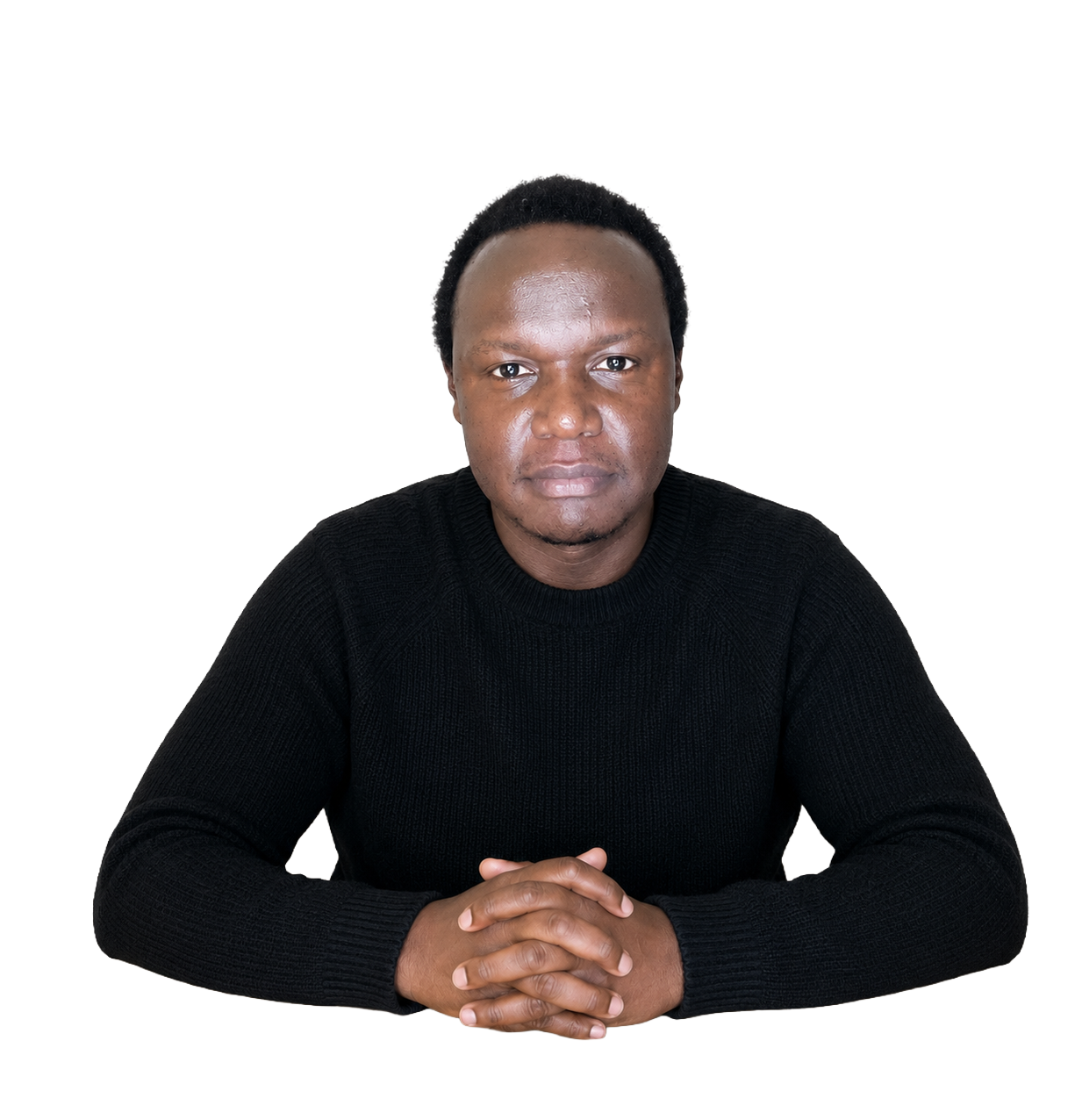
We sat down with Joseph Kariuki, a geospatial engineer based in Nairobi, who is currently working on international projects in Mozambique, Malaysia etc., at the comfort of his home. He tells us how he got this far, and the journey from way back in primary and secondary school.
So, What Exactly Is Geospatial Science/Engineering?
Geospatial engineering (sometimes referred to as geomatics engineering) is the field that generally deals with collecting, analysing, and presenting information about the earth's surface. Professionals in this field deal with satellite data, digital maps, land information systems, web-based mapping applications etc.
In Kenya and across Africa, geospatial engineers help governments manage land ownership, plan cities, monitor the environment, and build location-based technology solutions. It sits right at the intersection of geography, data, and technology.
Do You Have to Be a Top Maths Student to Study It?
This is the question that stops most students before they even start and Joseph's answer might surprise you.
Geospatial is a broad field. Some specialisations, like surveying and remote sensing, do lean into mathematics. But others including digital mapping and geography-based analysis are far less mathematics-intensive. Joseph himself says geography was his strongest and most loved subject all through primary and high school, and he preferred it over mathematics.
"Geography specifically is an art," he says.
The bottom line: if you love geography, maps, nature, or technology, there is a place for you in this field, even if mathematics is not your best subject.
Where Did Joseph's Journey Begin?
Joseph did not wake up one day and decide to become a geospatial engineer. The interest grew quietly, long before he knew the career existed.
As a child, he was drawn to science fiction series that involved space, jurisdictions, and the way the world was mapped and organised. Family trips to national parks and wildlife areas deepened that pull toward geography and the environment. By the time he got to primary school, geography was already his favourite subject. Looking back now, he sees those results not as a coincidence, but as an early signal pointing him in the right direction.
Just like Joseph, students can get ideas of careers they would like to end up in, by paying attention to their day to day likes and interests.
The University Years: Where the Real Education Began
Joseph enrolled for a Bachelor's degree in Geospatial Engineering at the University of Nairobi — a five-year programme under the Engineering and Technology cluster, available through KUCCPS.
University gave him the much-needed skills that come with the education system. Group assignments taught him how to work with people who thought differently. Presentations pushed him to find words for ideas that lived in his head. He learnt how to communicate, collaborate, and show up consistently, skills that no textbook can fully teach.
The downside? Joseph admits that some of what filled those lectures halls never followed him into the real world. He wishes that the curriculum was streamlined to focus on and prioritize what he would need in his career as a geospatial engineer.
To make up for some of the curriculum cons, Joseph started looking outward.
He joined the Google Mapmaker Challenge, a project that invited people to help populate Google Maps with real Kenyan location data. He also contributed to the Here Maps platform online, identifying and logging points of interest from his screen. No lecturer told him to do it. He simply saw an opportunity to do real work and took it.
"If you only concentrate on the school bit, you miss out on learning what you will actually do when you go to work," he says.
By the time graduation drew close, Joseph was not just a student with a degree in progress. He was someone who had already touched real projects, built practical experience, and begun to understand what geospatial engineering actually looked like outside the university walls.
That would matter more than he knew.
The Job Hunt: The Part Nobody Prepares You For
Joseph graduated with two expectations: A good job and a competitive salary. Neither came on schedule.
What came instead was an unpaid internship. The reality stung a little.
"My expectation was a job of high salary," he recalls, laughing. "Then I was told that there is no pay, but I was going to gain some tremendous experience. And honestly, I did."
The mindset shift that carried him through was simple: stop chasing a salary, start chasing experience. Because the right experience, from the right organisation, opens doors that a degree certificate alone never can.
Two other things kept him going during those early uncertain days. The first was mentorship. A senior professional mentor encouraged him to keep applying, keep showing up, and keep looking for opportunities. The second was impact. The moment Joseph saw systems he had built being used by real people across a region, something shifted. The work stopped feeling like a hustle and started feeling like a calling.
That feeling, he says, is what kept him going when things were hard.
What His Career Looks Like Today
Fast forward to today and Joseph's typical week looks like this: he wakes up, opens his laptop, and spends his day building web applications, web maps, and geospatial systems for clients and organisations. Some days he works alone. Other days he leads a team of developers or reports into a project manager. Most meetings happen online, and some allow him to travel out — the kind of remote working setup that many Kenyan graduates are now actively chasing.
"Geospatial engineering has made me meet people from different cultures, different countries," he says. "It has elevated me into a global citizen."
What Would You Tell Someone Younger Eyeing your Profession?
When asked what message he would give to a student still in high school choosing subjects and still unsure, he does not talk about cluster points or salary projections. He talks about two things: passion and purpose.
"You need to be passionate. And you need to have a purpose — a why. Why geospatial? Why geography? Even if somebody in high school may not know a lot, at least have some form of vision," he says.
Do not choose a course because everyone around you is choosing it. Do not walk away from a field because it sounds complicated. Find the thing you would work on even without a salary attached to it then build the skills to make it pay. That combination, Joseph says, is what separates a career that burns you out from one that keeps you going.
"If I were taken back 10 years ago," he says, "I would still want to go through the same experience."
That is something many people do not say about their careers.
Watch the Full Interview on EduSens Africa
This article covers the highlights, but the full conversation goes much deeper. Joseph talks about the specific challenges he faced breaking into the field, how mentorship shaped his trajectory, the projects he is working on right now, and what he wishes someone had told him before university.
If you are a student still deciding on a course, a graduate feeling stuck, or a parent trying to understand your child's career options — this interview is worth watching from start to finish.
👉 Watch the full career interview with Joseph Kariuki, and subscribe so you never miss a conversation with a Kenyan professional who has been where you are trying to go.
If this article helped you — share it. Because somewhere out there, a student is about to overlook this career simply because nobody showed them it existed.
Join the Conversation
Share your thoughts, questions, or your own experience below
Leave a Comment
Your email will not be published. By commenting you agree to our Privacy Policy.